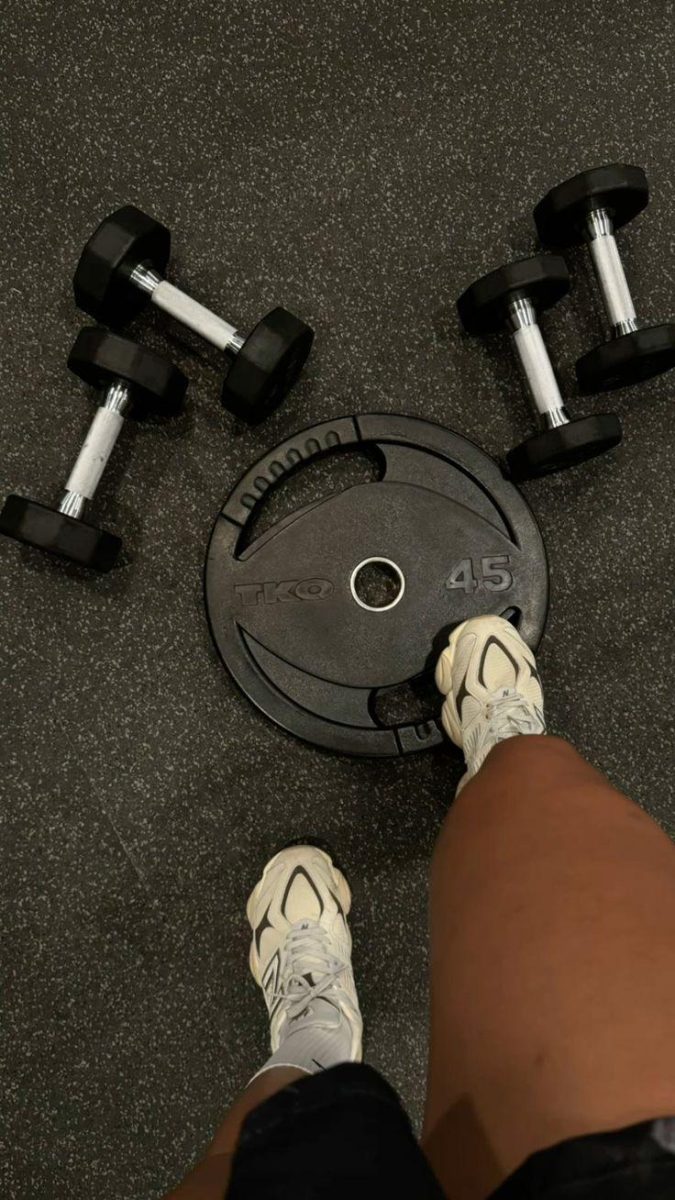

















Note: I am not a professional in this field; I am relaying and simplifying information from various studies. As always, when making any lifestyle changes that alter your baseline level of activity or eating habits, make sure to talk with your doctor to see if these changes are right for you.
Building muscle is a complex biological process that can be broken down into simple steps that come down to changing certain aspects of one’s life or adding new ones. By building muscle, certain changes can be noted, such as one’s health, appearance, and strength.
1: Challenge the Muscles
Resistance training is recognized as one of the most effective ways of increasing muscle mass.
This is because it provides mechanical tension, which happens when muscles are challenged through resistance training like lifting weights, push-ups, or resistance bands. When muscles are placed under increasing resistance over time, the body adapts by making them stronger and larger.
- Eat enough Protein and nutrients
It seems as if nowadays it’s all about protein; everything has a giant protein sticker slapped on the front of the packaging. Does this mean that consuming every single product with protein in big bold letters needs to be consumed to build muscle? Of course not. While protein is indeed an important component, it is not the only one to focus on.
Proteins like chicken, eggs, dairy products, beans, tofu, and nuts are good protein sources. Protein powders can also be used as a way to supplement one’s protein intake, as eating enough protein can be a challenge for some. Proteins are the building blocks for muscle, but to sustain enough energy for the body and mind, carbohydrates are recommended, as workouts can be very demanding of the body’s energy. Carbs such as rice, oats, fruits, and potatoes can provide the energy that is needed to sustain workouts.
- Recover
Muscles do not grow during the workout itself, as it is mainly a stimulus that signals the body to allow for growth. Muscles mainly grow while the body rests and has a chance to recover and build itself back up. Sleeping well ensures that any damaged muscle fibers are repaired and there is enough energy for the next workout.
Hydration is another important factor when it comes to building muscle. Since the human body is about 70-75 percent water, and the muscles hold on to a large portion of it, it is crucial to stay hydrated to maintain normal function. Rest days are also recommended to let the body recover outside of sleep.
- Consistency
Muscle growth takes time. By being consistent with training, eating well, and recovering properly, one can expect to feel progress in three to four weeks. Previous resistance will begin to feel easier, allowing for new feats in strength. In about two to three months, and so on. Changes in the definition of one’s muscles can be noticed.