












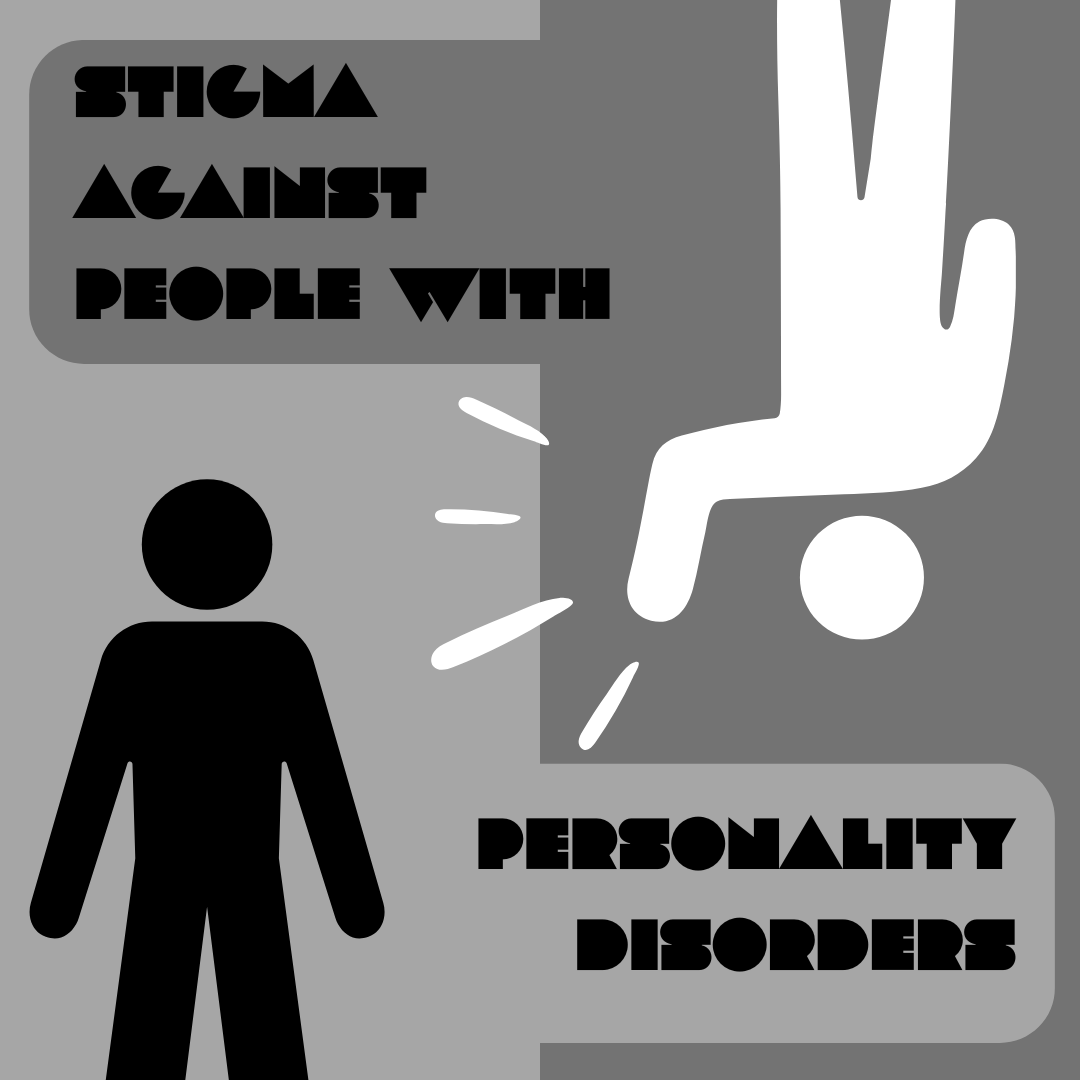
According to the American Psychiatric Association, more than half of people with mental illness don’t receive help for their disorders (Singhal), due to factors such as fear of being treated differently among individuals including: doctors, coworkers, or others. This includes people with Cluster B personality disorders, such as: Borderline Personality Disorder (BPD), Narcissistic Personality Disorder (NPD), Antisocial Personality Disorder (ASPD), and more.
A common misconception that people suspect of those with Cluster B personality is that they believe they are “evil,” “manipulative,” or “abusive.” These stigmas cause people to shame or avoid others with these disorders, including doctors. This can cause people with personality disorders to self-isolate, hide their disorder, or feel shame, but such stigma is nothing more than a matter of ableism.
People typically develop personality disorders due to past trauma or certain treatment, including emotional invalidation. It is not their fault for developing these disorders, as they are unable to control their past or their brain chemistry. Being harassed, disrespected, or being denied treatment for a disorder they cannot control is considered ableism. Due to that, it’s recommended that most people take some time to research Cluster B disorders or mental health conditions in general. Having knowledge on this subject will indeed bring in more compassion for individuals with Cluster B disorders.
People with BPD typically have symptoms that dysregulate their emotions. Leading to them having an intense fear of abandonment, increased chance of self-harm, and even an increased chance of suicide. However, not many people realize that such symptoms are more shown around people they’re close with, and are often polite among other people.
This is no different among people with NPD, who typically have symptoms -such as a fragile-self esteem, a need for admiration, and a high sense of importance. Many people often see these individuals as “manipulative,” and therefore insult people who have this disorder. Moreover, people also label others who are arrogant while lacking empathy “narcissists” without understanding the distinction between people with NPD and narcissistic traits, of which we all share.
In reality, people with Cluster B personality disorders are generally kind people, who put in effort on toning down their symptoms as a way to live a healthy life where their symptoms don’t negatively affect relationships or their well-being. It is important to be considerate of the fact that it is not their fault that they experience such symptoms due to these disorders. Taking time on educating yourself on these disorders and spreading the word on stigma awareness will highly reduce the amount of ableism in society. Not only that, but it will make life easier among all individuals.