













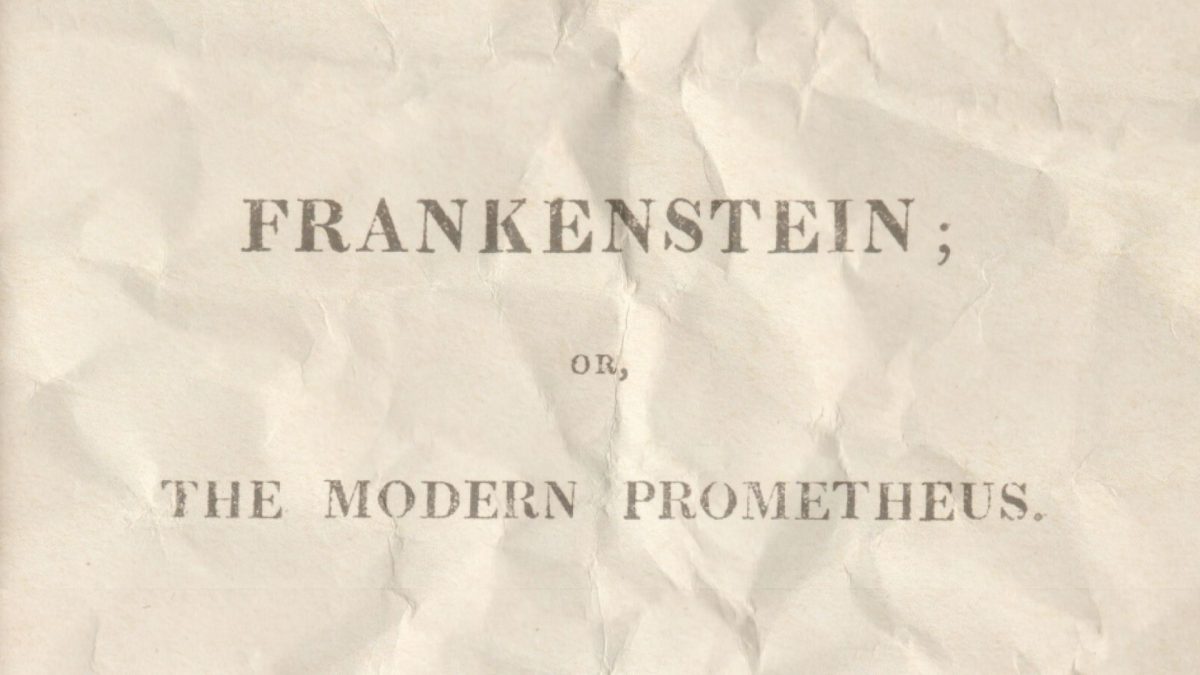
Frankenstein is a timeless novel written in 1818 by British Romantic Goth author, Mary Shelley. Developed through a ghost story challenge with friends in 1816, at only 18 years old, Shelley created an insightful piece of literature that comments on the nature of humanity and the risk of unchecked ambition.
I found this story so intriguing and genuinely found it hard to put down at times. I will admit there were some parts I felt got a little lengthy, but for the most part, the suspense and passion was consistently there. Additionally, as much as I hate to admit it, I typically find it difficult to read literature written a long time ago as the vocabulary and ideas were different at the time, however, Frankenstein just clicked in my head and the words just made sense. It’s descriptive imagery, modern references, and themes that transcend time made the story feel so real and easy to connect with.
Frankenstein’s storyline is also truly remarkable. When I read it, I was amazed at its fast yet compelling pacing that still made sense to the reader. The story primarily follows a determined Victor Frankenstein who devotes himself to natural science and strives to create a “better species” than humans. His childhood surprised me as it wasn’t brutal, or isolated, but it was happy and spoiled. Perhaps too spoiled as it leads him to become egotistical and shallow.
This contrasts with the character known in the book as “The Creature.” Opposed to Victor, he was immediately abandoned at birth with no parental figure other than Mother Nature herself. As an abnormally big and hideous sentient being, “The Creature” learns about the world through observation from the sidelines of society due to the harsh prejudices of the townspeople. Despite this, he refuses to hurt a single soul. As the story progresses, this distinction becomes heavily clear between the two and presents Shelley’s complex argument towards nature vs. nurture.
In the end, the two characters end up to be vessels harboring years of revenge and hatred for one another, but the one deemed as a “monster” by society is the one who was still able to feel shame and guilt for his actions as opposed to Victor who couldn’t let go of his conceited propensities until his final breath. I found this to be so emotional and honestly, poetic, to show the duality of man with two heavily contrasting characters. Due to their incredibly different life paths, the way this is presented is so symbolic and intricate.
The story also offers a unique structure as the narration starts through letters written by Robert Walton, an ambitious sailor, to his sister on his journey to the North Pole. He describes in these letters how he finds Victor Frankenstein out on a block of ice barely alive. It then goes to 1st person narrative as Victor tells Robert the story of how he ended up there. In the middle, the narration goes from Victor to “The Creature” and his story after being abandoned. This unique framing allows us, as the reader, to see each character from a different viewpoint. For example, Walton sees Victor as a noble man who was hurt by tragedy; Victor sees himself as a genius, god-like figure, and after the events of “The Creature,” he acts as the victim and blames fate for his problems. Lastly, “The Creature” sees him as a cruel, unjust creator whom he has become the monstrous reflection of.
All in all, Mary Shelley wrote an amazing book that can be interpreted into modern times. By developing her 2 main characters, Frankenstein and “The Creature,” she tells a powerful story of human nature and the corruption of it.