















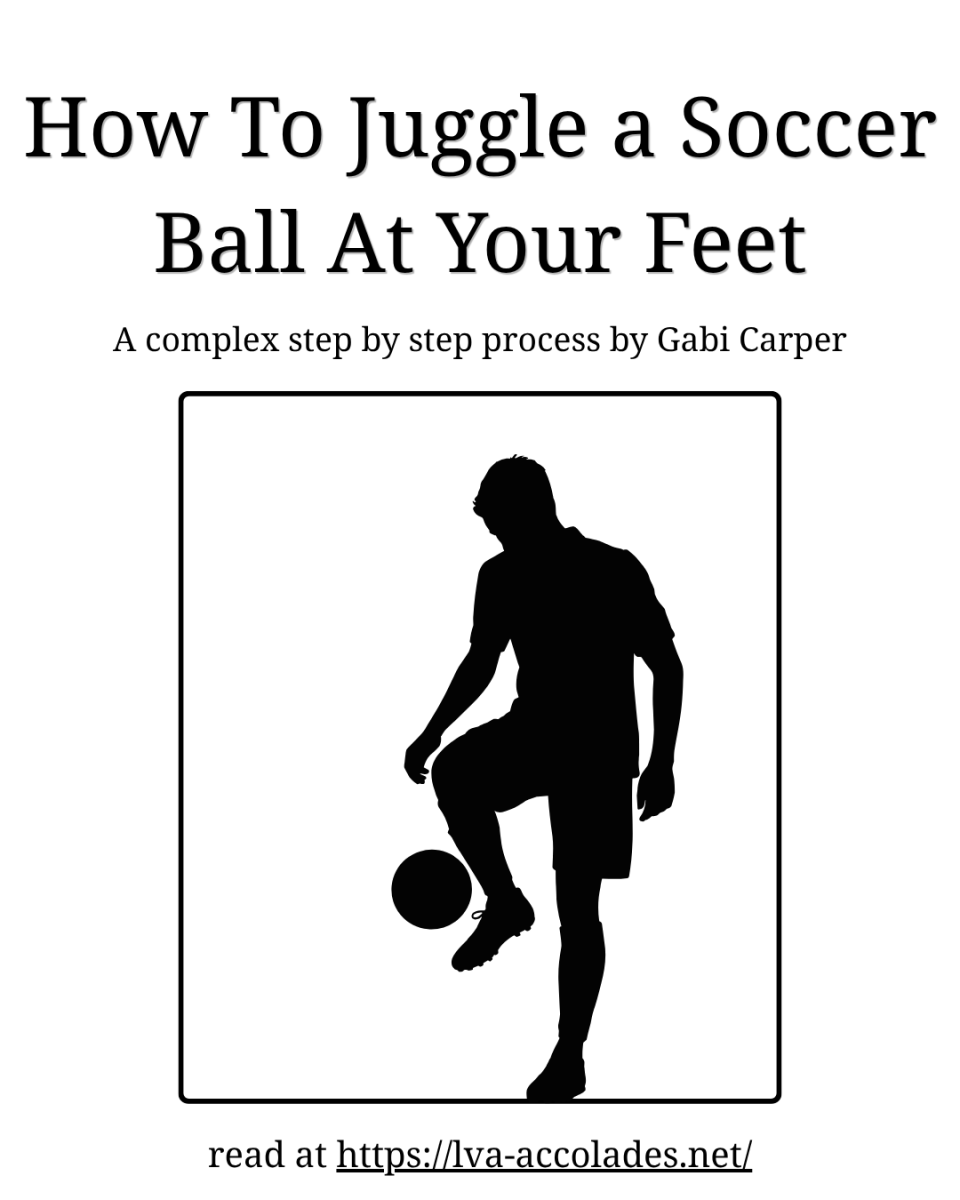
Learning how to juggle a soccer ball at your feet is a skill that almost everyone can develop with consistent practice. It’s not just limited to soccer players, anyone can do it and turn it into a hobby or even just as an impressive trick that you could do anywhere and show off to your friends. Although it may seem difficult at first, with lots of consistent practice it becomes easier than most people expect. The best part is that it is a skill that develops gradually, even small daily practice sessions can make a noticeable difference over time. Here’s a very complex step-by-step process on how to juggle a soccer ball. To get started, you only need a few things, a soccer ball of course, a comfy pair of shoes or your bare feet, and an open space where you have enough room to move freely.
Begin by holding the ball in your hands and dropping it in front of you. Let it bounce once and gently kick it back up with your dominant foot before catching it. This might seem too simple but it helps you get used to the timing of the drop and feel of the ball on your feet. Understanding how the ball moves after each touch is the foundation for all juggling skills and prepares you for keeping it off the ground later.
Once you feel comfortable with the basic bounce, the next step is to try keeping the ball in the air using just one foot. At this point it’s normal to let the ball bounce between touches as you develop your control. Focus on making light, controlled taps rather than strong and heavy kicks, and keep the ball low so it stays close to your body. Using the laces area of your dominant foot instead of your toes will give you better consistency and allow you to better manage the ball’s height and direction. This step is where coordination and patience really start to play a role, because each touch requires you to adjust your body and anticipate the ball’s movement.
After you become comfortable with juggling with one foot, it’s time to alternate between both feet. Switching between your left and right-foot builds balance, improves rhythm of juggling, and makes it easier to react in real time. At this point, you can start challenging yourself by counting how many touches you can get in a row without dropping the ball. Setting small goals like three, then five, or even ten helps you by tracking your progress and giving you a sense of accomplishment as your skill improves. Each small milestone encourages you to continue practicing and pushes your coordination even further.
Lastly, with lots of consistent juggling with both feet and growth in your progress with juggles in a row, you’ve really got the basic juggling down. If you want to challenge yourself more you can start adding more tricks to learn by using different parts of your body like your thighs, head, or shoulders. Adding these variations not only improves your overall coordination, but can keep your practicing exciting and not just the same boring juggles. Juggling can grow from a simple hobby into a fun skill based challenge that continues to improve your focus, balance, and timing. With consistent practice anyone can master juggling and use it as a cool way to show off, stay active or challenge themselves with new fun skills.